

🏆 Why AI Humanizers Don’t Work (And How to Actually Fix AI Text)
Why AI humanizers don’t work is a common question among students and writers who struggle with AI content detection. Even after using an AI humanizer tool, many users find that their AI text is still detected by systems like Turnitin AI detection. The reason is simple: most tools fail to properly humanize AI text and instead only rewrite words without changing deeper AI writing patterns. This is why people often feel that their AI humanizer is not working, especially when trying to avoid advanced AI detection tools.
Used an AI humanizer but your content is still getting flagged by AI detection tools like Turnitin? You’re not alone. Many students, bloggers, and marketers try to humanize AI text, but the results still feel robotic and often remain detectable. The issue isn’t just the tool—it’s how most AI humanizers actually work.Lets Understand why AI humanizers don’t work helps improve your results
AI humanizers often fail because they rewrite text without changing the deeper structure, tone, and patterns that AI detectors analyze. This is the main reason why your content still gets flagged even after using multiple tools.
Why AI Humanizers Don’t Work properly
AI humanizers don’t work properly because they mainly replace words instead of transforming how the content is written. They change vocabulary, but they don’t change the writing style. AI detection tools focus on patterns like sentence structure, predictability, and consistency, so even rewritten content can still be identified as AI-generated.
Another major issue is that most tools only do surface-level rewriting. They swap words with synonyms or slightly adjust sentences, but the core structure remains the same. That’s why the content still feels artificial, even if it looks different at first glance.
These tools also lack true understanding of context and tone. They don’t fully understand the meaning behind your writing or who it’s for. Because of that, the output often feels generic, awkward, or unnatural. It may be grammatically correct, but it doesn’t sound like real human writing.
At the same time, AI detection tools have become much smarter. They analyze writing patterns, consistency, and predictability instead of just looking at words. So even if you rewrite text, the hidden patterns remain—and that’s why AI humanizers don’t work effectively
Another reason is that AI writing lacks natural human signals. Real human writing includes variation, emotion, and even small imperfections. AI-generated content is often too clean and too structured, which makes it easier for detection systems to flag it.
Do AI Humanizers Work on Turnitin?
Most AI humanizers do not fully work on Turnitin because they don’t remove the deeper writing patterns that AI detectors look for. They may reduce detection slightly, but they rarely eliminate it completely.
If you are using a tool like the AI humanizer on Humanivio , it’s important to combine it with proper editing instead of relying on it alone.You can also learn more advanced strategies here: More articles to read
How to Fix AI Text That Gets Detected
If your AI-generated content is still being detected, the solution is not just rewriting—it’s transformation.You need to change the tone of your writing to make it more natural and conversational. Instead of sounding formal or robotic, try writing the way you speak. Adding a human voice makes a big difference.You should also vary your sentence structure. Avoid writing sentences that all look the same. Mix short and long sentences, and use a more natural flow to reduce predictability.Another important step is adding personalization. Include examples, opinions, or real-life context. This makes your content feel more genuine and less like something generated by AI.
Finally, break predictable patterns. AI writing often follows a consistent structure, so changing that structure helps reduce detection. You can also explore better tools and approaches here: AI humanizer tool on Humanivio
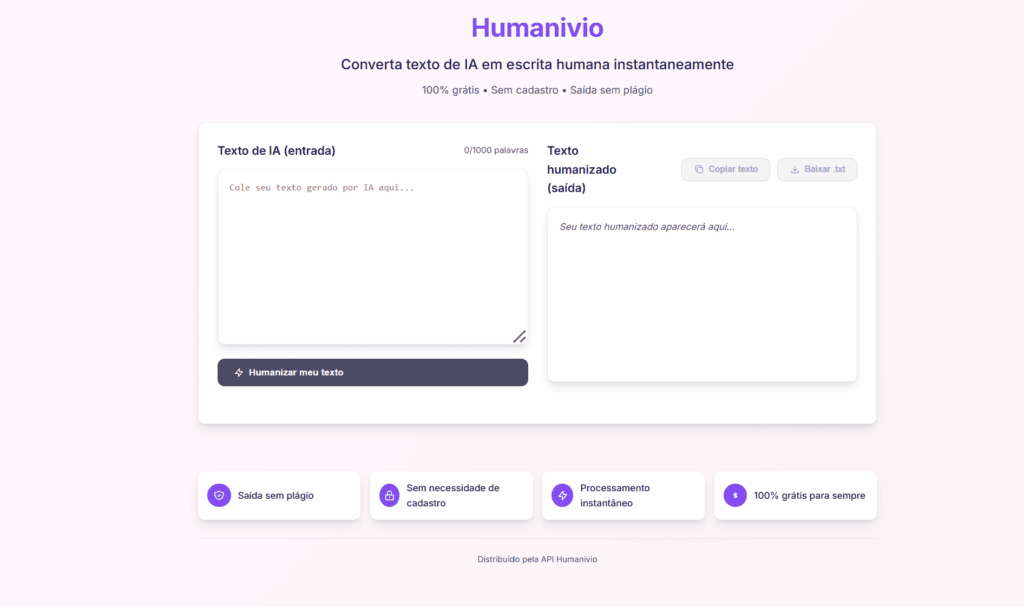
why AI humanizers dont work for ai detection
If your content is still getting flagged, it’s usually because the structure hasn’t changed, the tone still sounds robotic, and there is no real human variation in the text.
Even advanced tools struggle with this because they don’t fully replicate how humans naturally write. That’s why combining tools with manual editing gives better results.
AI vs Human Writing: The Real Difference
AI writing is predictable, structured, and consistent. It follows patterns that are easy for detection systems to identify.
Human writing, on the other hand, is dynamic, slightly imperfect, and more expressive. It includes emotion, variation, and natural flow, which makes it harder to detect.
This difference is exactly what AI detection tools are trained to identify.
Final Thoughts
AI humanizers don’t completely fail—they’re just too basic for modern detection systems. They focus on rewriting words instead of transforming the way content is written.
If you want better results, focus on changing tone, breaking patterns, and adding human elements to your writing. Tools can help, but real humanization comes from how you shape the content.
For deeper insights and tool comparisons, you can check this page: Best AI Humanizer
2 thoughts on “Why AI Humanizers Don’t Work”
Comments are closed.